Showing posts with label experiment. Show all posts

Friday, May 18, 2018

Shark Bait


During a research experiment, a marine biologist placed a shark into a large holding tank and then released several small bait fish into the tank.


As you would expect, the shark quickly swam around the tank, attacked and ate the smaller fish.


The marine biologist then inserted a strong piece of clear fibreglass into the tank, creating two separate partitions. She then put the shark on one side of the fibreglass and a new set of bait fish on the other.


Again, the shark quickly attacked. This time, however, the shark slammed into the fibreglass divider and bounced off. Undeterred, the shark kept repeating this behaviour every few minutes to no avail. Meanwhile, the bait fish swam around unharmed in the second partition. Eventually, about an hour into the experiment, the shark gave up.


This experiment was repeated several dozen times over the next few weeks. Each time, the shark got less aggressive and made fewer attempts to attack the bait fish, until eventually, the shark got tired of hitting the fibreglass divider and simply stopped attacking altogether.


The marine biologist then removed the fibreglass divider, but the shark didn’t attack. The shark was trained to believe a barrier existed between it and the baitfish, so the bait fish swam wherever they wished, free from harm.


The moral: Many of us, after experiencing setbacks and failures, emotionally give up and stop trying. Like the shark in the story, we believe that because we were unsuccessful in the past, we will always be unsuccessful. In other words, we continue to see a barrier in our heads, even when no ‘real’ barrier exists between where we are and where we want to go

Sunday, April 17, 2016

Perception of Life

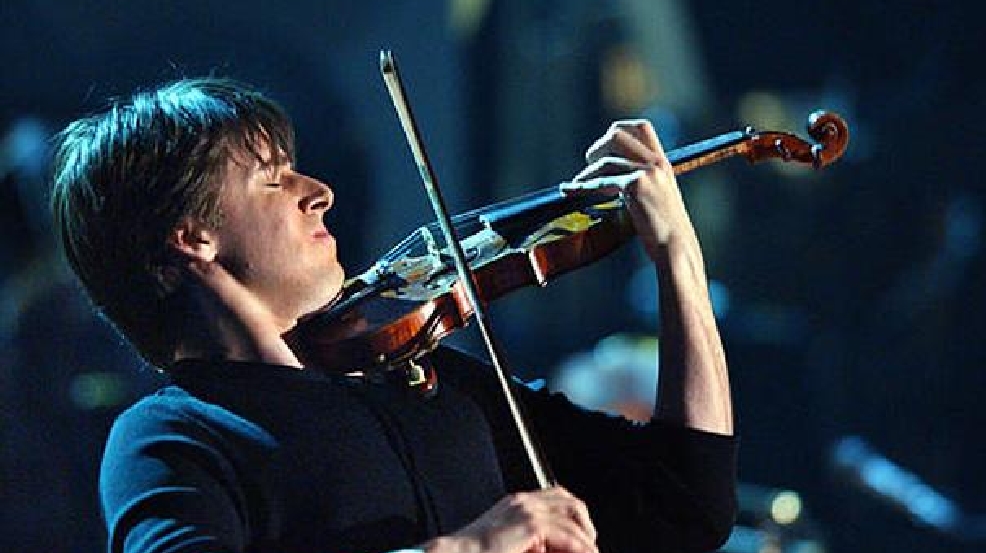
In Washington, DC, at a Metro Station, on a cold January morning in 2007, this man with a violin played six Bach pieces for about 45 minutes.  During that time, approximately 2,000 people went through the station, most of them on their way to work.  After about 3 minutes, a middle-aged man noticed that there was a musician playing.  He slowed his pace and stopped for a few seconds, and then he hurried on to meet his schedule.

About 4 minutes later:

The violinist received his first dollar. A woman threw money in the hat and, without stopping, continued to walk.

At 6 minutes:

A young man leaned against the wall to listen to him, then looked at his watch and started to walk again.

At 10 minutes:

A 3-year old boy stopped, but his mother tugged him along hurriedly.  The kid stopped to look at the violinist again, but the mother pushed hard and the child continued to walk, turning his head the whole time.  This action was repeated by several other children, but every parent — without exception — forced their children to move on quickly.

At 45 minutes:

The musician played continuously. Only 6 people stopped and listened for a short while.  About 20 gave money but continued to walk at their normal pace.  The man collected a total of $32.

After 1 hour:

He finished playing and silence took over.  No one noticed and no one applauded.  There was no recognition at all.

 No one knew this, but the violinist was Joshua Bell, one of the greatest musicians in the world.  He played one of the most intricate pieces ever written, with a violin worth $3.5 million dollars.  Two days earlier, Joshua Bell sold out a theater in Boston where the seats averaged over $100 each to sit and listen to him play the same music.


This is a true story. Joshua Bell, playing incognito in the D.C. Metro Station, was organized by the Washington Post as part of a social experiment about perception, taste and people's priorities.

This experiment raised several questions:

In a common-place environment, at an inappropriate hour, do we perceive beauty?

If so, do we stop to appreciate it?

Are we able to recognize talent in an unexpected context?

One possible conclusion reached from this experiment could be this:

If we do not have a moment to stop and listen to one of the best musicians in the world, playing some of the finest music ever written, with one of the most beautiful instruments ever made . . .

Maybe.... that the children could perceive the beauty and the spark of an all time great masterpiece .. as the parents rushed through the groove called LIFE.

How many other things are we missing as we rush through life?

Enjoy life NOW . . . it has an expiry date!
😊👍💐